
We highlight inspiring Pacific Islanders across academic and professional fields.

Malia Camero, born in O’ahu and raised on the Big Island, shares how she chose her career path in nursing at Azusa Pacific University

Elzira Noga shares how Pasefika representation in STEM and family support led her towards Civil Engineering and Building Science at the University of Southern California.

Kailena Akau, born in Waimea and raised in Kawaihae, shares how her family and Hawaiian culture have brought her on a path to becoming a Hawaiian language and studies teacher.

Discover student-athlete Braeden Samura’s journey from Kamuela to Pacific Lutheran University.

Meet rising USC sophomore, Ka’iulani Bento, and discover what it took for her to navigate her way to higher education.


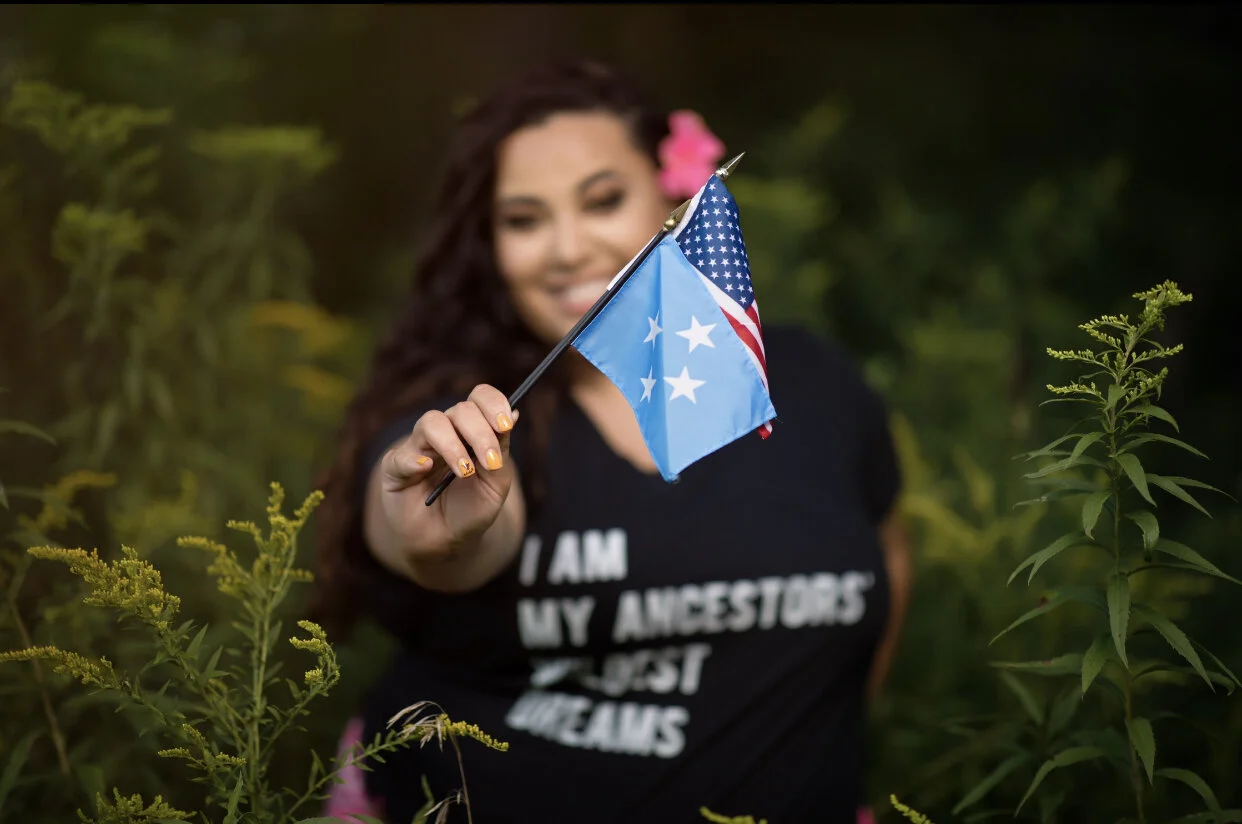
“I started a podcast that was all things Micronesian because we are often reading, hearing, and digesting our stories as told by others and not from us, directly. When you put a microphone in a Pasifika brother or sister’s hand, you give them a voice. And their voice is power(ful).” - Angela Edward
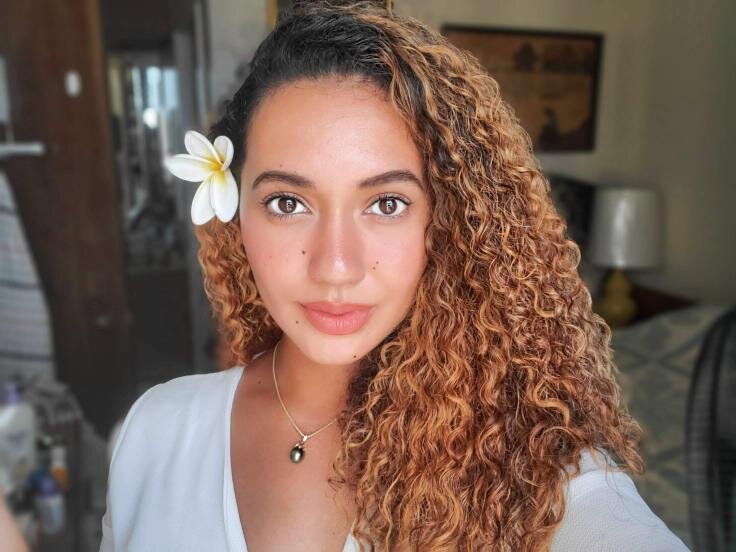

In Aotearoa, Māori and Pasifika only make up 2.5% of staff positions in science institutions. Te Aue Addison-Valaau through her organisation Plant & Food, is leading the launch of a new annual Māori and Pasifika internship programme for 25 young scientists and business scholars to impact the future of New Zealand’s science system.

Poet and Pasifika community advocate, Reina Kapiolani Pahulu, shares why she created The Manava Circle and The Mo’unga Project — community projects that empower Pasifika communities.

Learn about Marlena Wolfgramm’s journey to researching Persistence and Retention of Pacific Islanders in STEM.

TupuToa alum and 2018 winner of the Prime Minister’s Leadership and Inspiration Award, Asena Tolungamaka shares the reason for helping to lead Navigators of Success and why we need more Pacific representation in policy.

Michael Tui, born and raised on Oahu, shares his experience navigating undergrad and grad school as a first generation student. Driven by his desire to uplift his community, he’s served in the mental health field by providing trauma-informed care and the law enforcement field as a police officer for the Honolulu Police Department. He now works on an award winning program in North Carolina as a Behavioral Health Specialist helping emergency medical personnel cope with physical and mental health conditions.

Michael Green Jr.’s dedication to equity and inclusion is undoubtedly connected to his diverse life experiences and his humble upbringing as a child in Desoto, Texas. A first-generation college graduate from North Carolina Agricultural and Technical State University, Michael Green Jr. currently serves as the Dean of Culture and Instruction for Uplift Education, where he impacts teacher practices and influences the way schools provide culturally sound educational experiences for all students.

Papua New Guinean non-profit founder, tv-series host, mother of 5, and health advocate, Jennifer Baing-Waiko, shares her journey creating Save PNG and the Healthy Pacific Campaign. She encourages Pacific communities to trust their Pacific ancestors and go back to a more traditional diet.

South Pacific Islander Organization advocates for the creation of intentional spaces specifically led by and created for Pacific Islanders.

Meet the founder of Afakasi Prints and learn why she decided to create a social justice collection fighting againt the systemic racism faced by BIPOC communities.

Lorna-Lei Sua'ava, Samoan undergraduate scholar at Southern Virginia University, shares her transformative experience as a recipient of a National Science Foundation-funded Biochemistry internship at Brigham Young University, Provo. She hopes to see an improved American Samoan healthcare system empowering traditional medicinal practices.

South Pacific Islander Organization (SPIO) is excited to announce the launch of its first open source project: the SPIO Directory of Educational Resources.

Patricia “Patty” Leilua is a Samoan woman born and raised in Melbourne. Patty shares her educational journey, her experience working at Le Mana Pasifika, and why she’s pursuing a Masters in Teaching.

Wilbert Alik is the inaugural recipient of the $5,000 USD 2019-20 SPIO Community Leadership Scholarship. Translating COVID-19 health materials for the Republic of the Marshall Islands (RMI), Wilbert is dedicated to community service. The power and strength of a community working together, along with his desire to preserve, protect and pass on the knowledge of his people, gave him motivation to pursue an Anthropology degree. He is now pursuing his Bachelor's Degree at Northern Michigan University.

Lessei Perelini is the inaugural recipient of the $5,000 USD 2019-20 SPIO Extracurricular Excellence Scholarship. Lessei, commonly known as “Sei”, was born in New Zealand; despite her Kiwi nationality, her upbringing took place in the depths of the South Pacific in American Samoa. Currently, Sei is pursuing a Bachelor of Arts with a double major in Politics and International Relations and Spanish at the University of Auckland.

Teiana Gonsalves is the inaugural recipient of the $5,000 USD 2019-20 SPIO Academic Excellence Scholarship. Teiana is a recent graduate of Kamehameha Schools Kapālama and was born and raised on the east side of Oʻahu, Hawaiʻi. She will attend Stanford University in the fall and plans on majoring in Political Science with a minor in Earth Systems along the Sustainability sub-plan.


Elizabeth V. Kite shares her educational path and journey to founding Tonga’s only youth-led NGO, Tonga Youth Leaders. She is now embarking on two new initiatives: Oceanic Leaders Alliance and Pacific Lead.
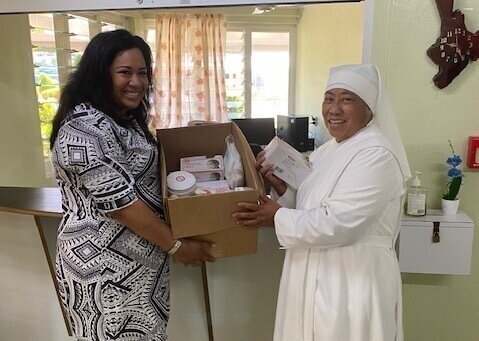
Doris Tulifau, founder of Brown Girl Woke, shares her story of resilience, tenacious advocacy and love for her community as she navigated higher education before pursuing her community advocacy work around gender equity in Samoa and American Samoa. She gives advice to people interested in becoming community organizers and working in the nonprofit field.
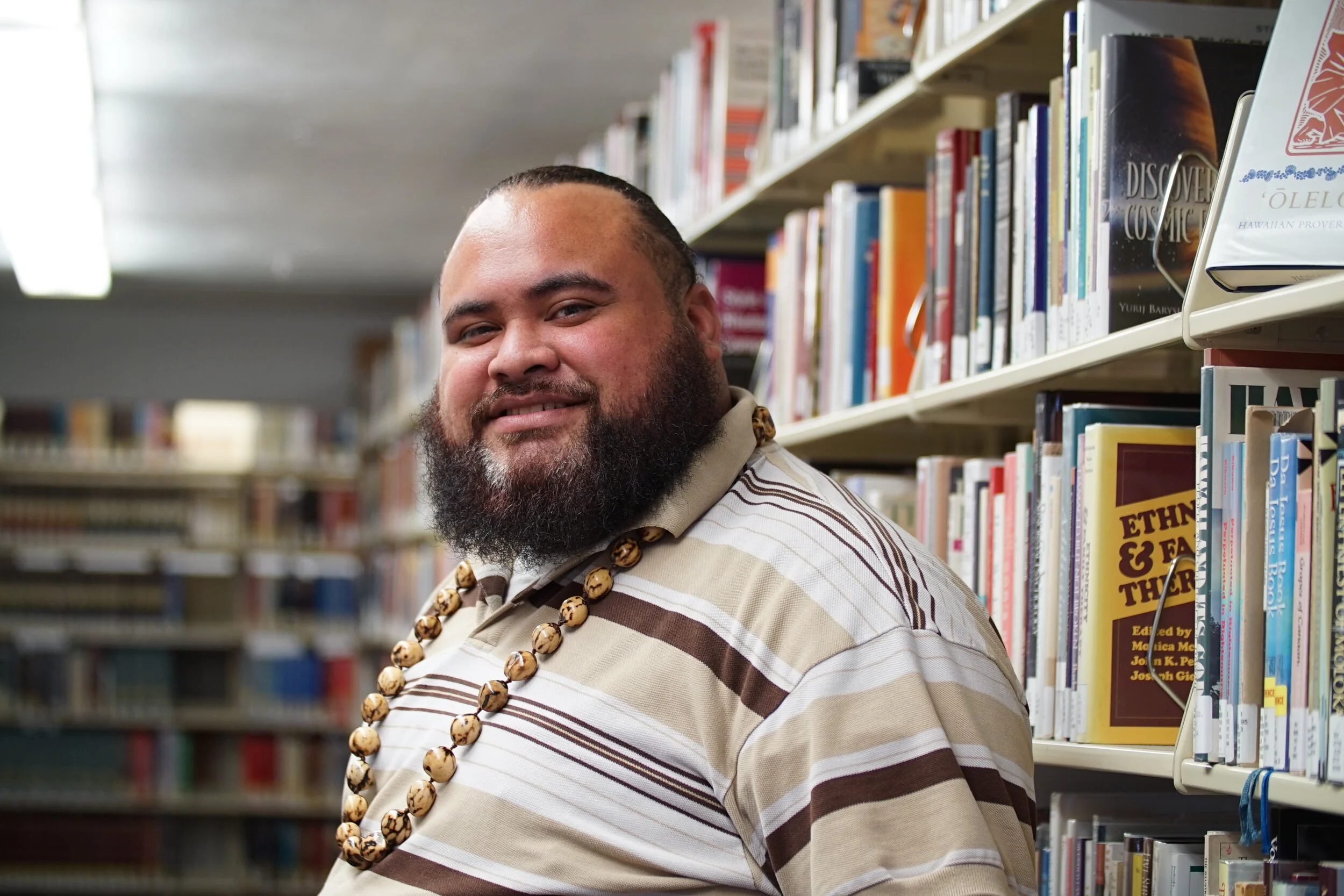
Eli Jennings shares his path from homelessness to Director of Financial Aid at Pacific Rim University in Hawai’i. He now provides students with the resources they need to find financial freedom.

Tongan healer, writer, and entrepreneur, Elizabeth Kaloumaira, talks about dropping out of university to follow her passion. She believes that university is not the only pathway for Pacific youth and that it's okay to forge your own path.
Tiana Masaniai, born in Orange County, CA, then raised in American Samoa until primary school, shares the struggles of her college journey and how she turned one of her biggest fears into a dream career. An advocate for equitable representation in film, she hopes to see an emergence of Pacific storytellers, writers, and actors in Hollywood.

Dr. Leolani Ah Quin encourages Indigenous youth to seek out new worlds and opportunities through higher education. Leolani shares her story of resilience, her untraditional path to a doctoral degree, and her advice to students pursuing higher education. She is currently the Clinical Director for a Tribal Nation in Arizona.

After graduating from Fa’asao Marist High School in American Samoa, Joseph V. Langkilde (JV) attended Salt Lake Community College before transferring to BYU where he majored in finance. Now a Harvard law student, JV talks about the graduate application process, provides tips for prospective law students, and discusses his grad school essay topic inspired by his family and tautua. He believes Pacific scholars should reflect on their cultural identity and how it has shaped them when applying to colleges and grad schools.

Andrew Ah Young shares tips on strategically applying to biomedical graduate programs and challenges Pacific scholars to embrace the unknown and pursue higher education abroad. He is currently a Research Scientist in the Bay Area, where he investigates the underlying causes of autoimmune diseases, such as rheumatoid arthritis, and develops new treatments. He hopes to see more Pacific scholars pursuing graduate degrees and careers in STEM.

Kalolaine “Kalo” Uechtritz Fainu, an avid advocate for Pacific representation in film, shares her motivations for creating the Pasifika Film Fest and offers tips for aspiring Pacific filmmakers. Born and raised in Australia, Kalo has family roots in Tonga, Papua New Guinea, and Samoa. She received a BVA Photography with a Photojournalist major from Griffith University and a Masters of Media Arts & Production from the University of Technology Sydney. She recently started a Masters in Asian and Pacific Studies from The Australian National University to learn more about Pacific cultures and communities.

Vehia Wheeler, co-founder of the 100% women-led Sustainable OCEANIA Solutions consulting firm, shares her/their educational experience in Hawaii and path to joining the first cohort of Asia-Pacific Obama Foundation Leaders.

Kapono Faitau shares his experience as a first-generation college graduate navigating college resources and finding sources of educational and career motivation. After graduating from Brigham Young University - Hawaii with a Bachelors of Science for Business Management, he worked in the hospitality industry for nearly a decade — starting in high school — before making a career switch into finance. He now works as a Financial Advisor at Morgan Stanley and provides wealth management solutions to families, individuals and businesses. Kapono hopes to see more Pacific Islanders work in finance as well as empower Pacific Islander families to get educated on financial planning.

Saeni Lele’a, a UC Davis graduate, shares her story as a Samoan biomedical engineer working at Fresenius Medical Care.

Ilima-Lei Macfarlane, Native Hawaiian professional MMA fighter shares why it is important to find community away from home, encourage our youth to pursue higher education, and support our larger Indigenous community.

Born and raised on the island of Tutuila in American Samoa, Gabrielle Langkilde is now a 3rd year student at Harvard College majoring in Women, Gender and Sexuality Studies and Sociology. Gabrielle shares her transition from island to mainland, her experience with culture shock, and the importance of creating spaces for Pacific Islanders to be empowered and represented across college campuses.

Jon Lautaha talks about his experience at Stanford, his professional growth in the Utah tech industry and the importance of embracing failure in order to grow as an individual. In fall 2019, Jon will start grad school, pursuing an MBA at Duke University’s Fuqua School of Business.

Samoan MBChB (Bachelor of Medicine and Bachelor of Surgery) at the University of Otago, Mosana Evagelia, shares her experience pursuing a medical degree and her insight on the health disparities for Māori and Pasifika communities in Aotearoa New Zealand. She hopes to educate health professionals on the importance of cultural competency and raise Pasifika health awareness in her community.

Raised in Aotearoa New Zealand and currently living in British Columbia to finish her PhD, Sereana Naepi talks about her journey through academia, her research findings on the experiences of Pasifika women in academia in the face of sexism and racism, and her thoughts on the designation “Asian Pacific Islander.” Soon returning to Aotearoa to work with young Pacific academics, she hopes to inspire more Pasifika scholars to pursue leadership positions in order to enable meaningful community-oriented change in higher education.

First-generation law student, Jullian Sekona, shares her experience as the only Tongan at UC Hastings College of the Law in San Francisco. Currently employed at Barulich Dugoni and Suttmann Law Group, Inc. in San Mateo, she hopes to see more Pacific scholars pursuing law degrees in order to provide more resources and representation for their community.

Teyonna Jarman talks about her multicultural identity and her experience as a first-generation college student. Now a Stanford alumna with a B.S. in Product Design, she plans on pursuing opportunities at the intersection of tech, entertainment and education. She hopes to see more students embracing and feeling empowered by their multicultural identities.

First-generation Native Hawaiian Stanford student, Jaysha Kuuipoaloha Alonz-Estrada, talks about changing majors, following her path and utilizing community resources in high school and in college (4-H, College Horizons, Leland Scholars Program, Muwekma Tah-Ruk) to empower her throughout her academic career.

Finausina Tovo talks about her transition from student-athlete to scholar, the importance of giving Pacific Islanders a voice in higher education and the Mana program’s effect on Pacific scholars. Using her research in California Community Colleges, she hopes to empower more students to pursue all their educational options and demand community at their school.

Tongan PhD candidate, Faka’iloatonga Taumoefolau, shares his academic path throughout the South Pacific, motivations for pursuing graduate degrees and advice for students pursuing higher education.

Community-minded Fijian entrepreneur, Ana Jones, talks about her transition from the British to the U.S. education system, how she serendipitously fell into her professional field and how she is working to improve the lives of elders through her business, Phlex65. She hopes to see more Pacific scholars using their degrees to solve community problems.

Daniel Tonga grew up in Kansas City with his Tongan-Hawaiian father and Puerto Rican mother. After going on his mission in Utah, he forged strong community ties and a desire to finish his college degree. He recently graduated from University of Utah in May 2019. He drew much motivation and inspiration to pursue higher education from his grandfather - a true trailblazer - who migrated from Tonga at age 16 to pursue his degree in Electrical Engineering at BYU and eventually worked at Ford, Northrup Grumman and Lockheed Martin. Daniel showcases grit and determination as he worked nearly full-time while finishing up his degree. He aims to pursue a career mixing finance and entrepreneurship.

UCLA’s PISA is one of the nation’s leading Pacific Islander (PI) higher education student groups. Since 1986, PISA has been fighting against Pacific Islander stereotypes, strengthening its community, and going out into the Los Angeles area to empower high school students to pursue higher education. With Pacific Islander college graduation rates below the national average and with Pacific Islander scholars representing less than 1% across all University of California (UC) institutions, PISA is working to improve those statistics through their impactful community programming. Karla Blessing Sāvaliolefilemū Thomas, president of UCLA’s PISA and Pacific Islander community leader, talks about the group’s history, programs, and the importance of PI representation in higher education.

Raised by her maternal grandparents in Tonga, Anita shares her experience transitioning to school in the U.S., drawing motivation to pursue higher education from her elders, and receiving the prestigious Gates Millennium Scholarship to fund her college and graduate degrees. Now in her last year of her EdD program at Northcentral University, she looks forward to sharing her research on the first-year college experience of Pacific Islanders in order to find ways to increase their college graduation rates.

Of I-Kiribati and Tuvaluan descent, Buriata Eti Tofinga grew up in Bikenibeu, a small village on the island of Tarawa in Kiribati. After completing her undergraduate degree at Victoria University of Wellington in New Zealand, she pursued a Masters degree at University of Sydney and a PhD from the University of the South Pacific. She now lives in Kuala Lumpur and works as a Lecturer at Monash University where she teaches and conducts research in the field of management and entrepreneurship. She hopes to see more Pacific Islander scholars pursuing careers in academia, because Pacific Islander representation in leadership matters.

Born and raised on the Makah Reservation and of Pohnpeian (Federated States of Micronesia) descent, MichaeLynn believes in the importance of supporting young indigenous people in exploring their paths. She also believes all students can become independent and successful contributors in their communities. After graduating from Stanford University with her B.A in Science, Technology and Society with a focus in Life Sciences and Biotechnology, MichaeLynn immediately returned home to Neah Bay, WA, eventually becoming the Project Manager for a SAMHSA Native Connections Grant, which focused on preventing suicide and substance use for indigenous youth. After spending 3 years working with her tribe to decolonize mental health approaches for Makah youth, she returned to school and is currently pursuing her M.A in Education for School Counseling at Seattle University.

Bay Area Filipino-Polynesian native, Keani Hin, shares her journey on becoming a Google sourcer. As the second oldest child in a family of 6 siblings, Keani held many family responsibilities early on, which helped set a strong foundation for her college and career success. With a passion for health and fitness she majored in Kinesiology, but changed courses out of college and is now working for one of the top tech companies in the world. Keani trusted in her path, and she’s found a genuinely caring and helpful community at Google. Her next personal goal: creating a podcast with her best friend.

After growing up in New South Wales and graduating from BYU with a degree in Finance, Aidan Reiri now works as a Business Analyst for one of the top management consulting firms in the world , McKinsey & Company. Aware of the lack of Pacific Islander presence in business settings, Aidan aims to mentor young Pacific Islanders interested in business and establish a space for Pacific Islanders within his company. He hopes to see more students branching out into different fields of study and pursuing leadership positions.
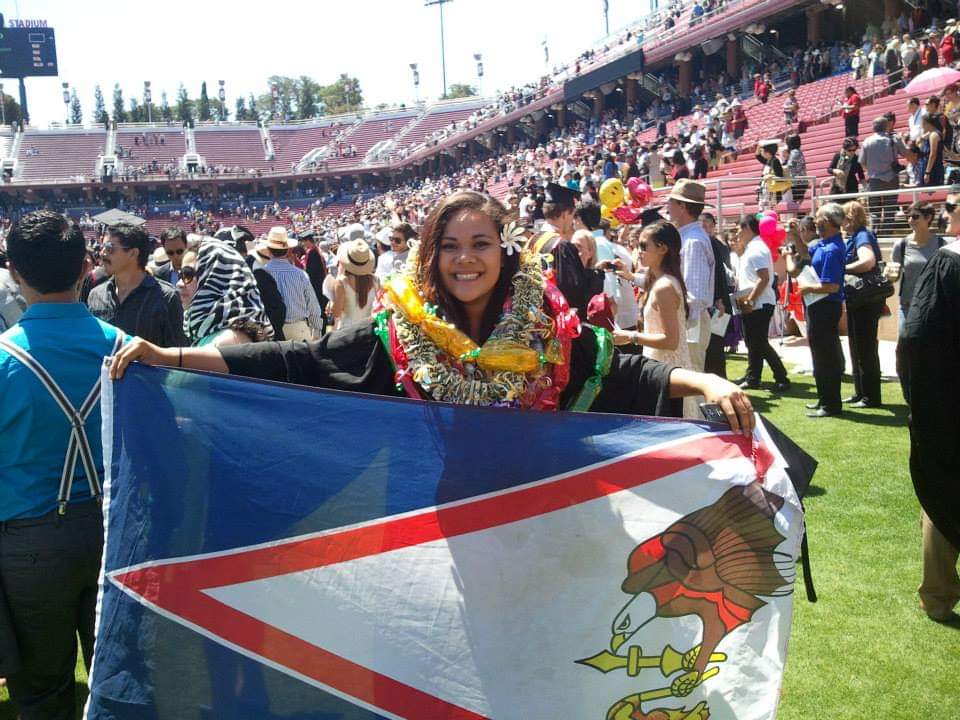
Emily Sataua Lautoa talks about culture shock in college, sexism in the engineering industry and the importance of pursuing higher education. While she currently works as a mechanical engineer, she one day hopes to give back to her community by providing engineering resources to students in her hometown of Pago Pago.
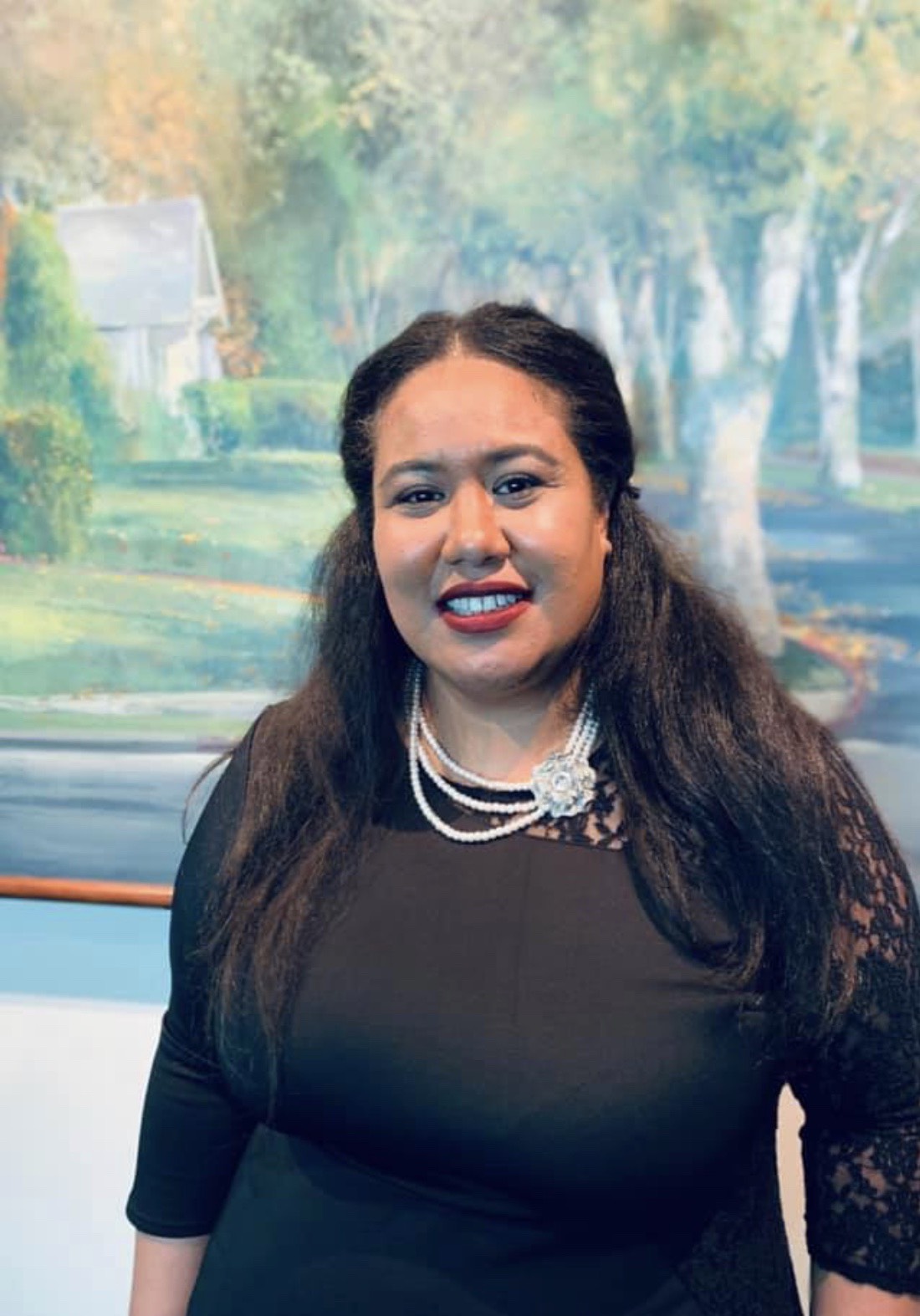
Esiteli Hafoka talks about her untraditional journey through higher education, her PhD work on Tongan-American religiosity and the importance of increasing Pacific Islander representation in academia.
Chloe Delos Santos, student at Colorado State University, discusses the resilience and passion needed to pursue a path in the medical field.